
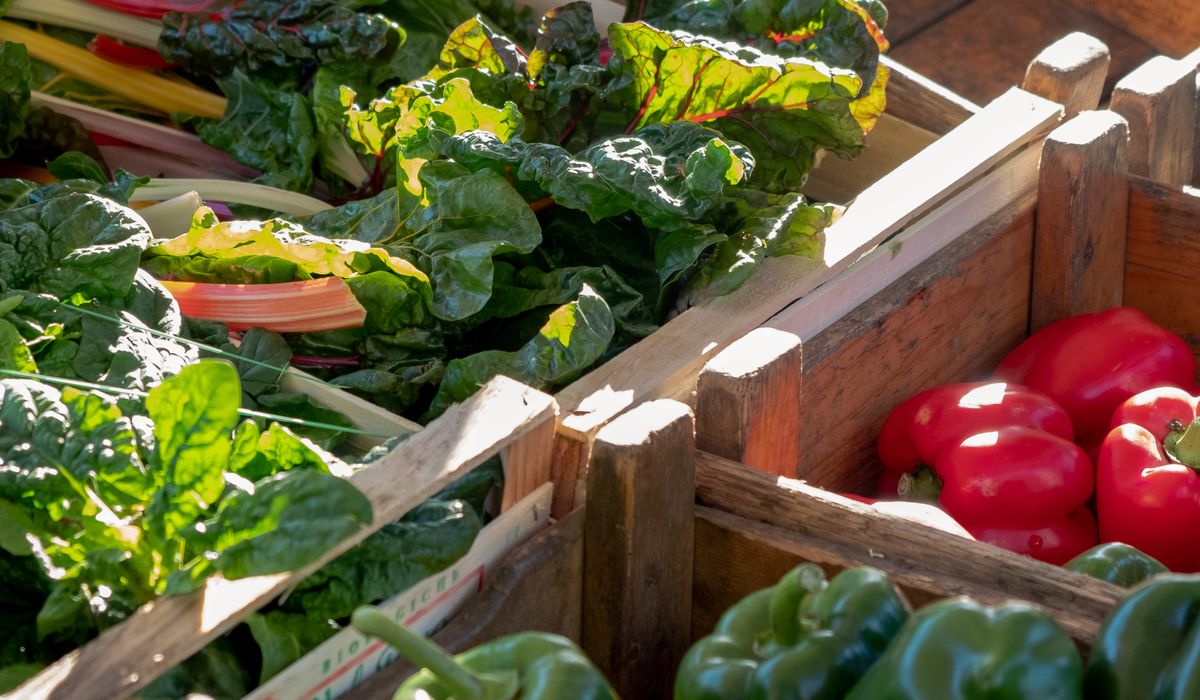
How to Eat Seasonally Through a British Spring
Why Spring Produce Tastes Like Spring
By March, most of us have eaten our way through a winter of roots, brassicas and freezer peas. Then the first real spring greens arrive, and the difference is startling: sweet, tender, almost grassy, with none of the bitterness that builds up in a plant left standing too long in cold ground. This is partly chemistry. Young leaves are low in the defensive compounds they develop later, and high in sugars and water, which is exactly why a bunch of purple sprouting broccoli cut yesterday and cooked today tastes nothing like the version that spent a week in a chilled lorry.
So the rule for spring cooking is simple: do less. Blanch, dress, roast, or stir through butter. Let the vegetable be the main event rather than a supporting act.
The First Greens: Purple Sprouting, Kale and Spring Cabbage
Purple sprouting broccoli is the great reward of the hungry gap, cropping from roughly February to April. Choose stems with tight, dark florets and no yellowing. Split any thick stalks lengthways so everything cooks at the same rate, then steam or blanch for two to three minutes until just tender. Toss with butter, lemon zest and a pinch of chilli, or lay it over toast with a spoonful of anchovy melted into the pan.
Kale and cavolo nero are still working hard now, and the colder months have actually sweetened them. Strip the leaves from tough ribs, shred finely and cook quickly with garlic and olive oil, or massage raw ribbons with salt, lemon and a little mayonnaise for a robust salad. Spring cabbage is looser and paler than its winter cousins, and delicious shredded raw with a mustardy dressing and a handful of toasted seeds.
- Look for firm, glossy leaves with no slimy patches.
- Cook greens uncovered for the first minute to keep their colour.
- Save the cooking water, it makes a fine base for soup or a pot of grains.
Rhubarb: The First Proper Pudding of the Year
Forced rhubarb is one of the loveliest oddities of British food. Grown in dark sheds and picked by candlelight in Yorkshire and a few other pockets of the country, it arrives from January to March: slender, shocking pink, and so tender it collapses in minutes. Outdoor rhubarb follows from April, coarser and greener, with a sharper, more bracing flavour that stands up well to ginger and orange.
Roasting is the least fussy method. Cut 500g into short lengths, spread in a single layer in a dish, scatter with two to three tablespoons of sugar and roast at 180C (160C fan) for 15 to 20 minutes. Do not add water; the rhubarb makes its own. A strip of orange zest, a knob of ginger or a star anise pod all work well. Serve with custard, cream or yoghurt, and remember that rhubarb is also a fine companion for roast pork, duck or oily fish.
Wild Garlic and Other Free Food
From March to May, woodland floors announce themselves before you see them, because the whole area smells faintly of garlic. Wild garlic leaves are broad, soft and pointed; crush one between your fingers and the scent is unmistakable. Take a few leaves from each plant rather than stripping a clump, and never dig up the bulbs.
Every forager has a cautionary tale about wild garlic and lily of the valley, which looks similar at a glance and is thoroughly poisonous. Lily of the valley leaves are usually in pairs, more rigid, and smell green rather than garlicky. Never eat anything you cannot identify with complete confidence, and check the rules on your local site before picking.
Used raw, wild garlic is milder than the bulb and excellent shredded into salads, folded through soft cheese or laid in a sandwich. Blitz it with nuts, hard cheese and oil for a vivid green pesto, or stir handfuls into soup at the last moment so it keeps its colour. The white star flowers are edible and make a pretty garnish. Young nettle tops work on the same principle: pick the top four leaves, blanch them, and treat them like spinach in soup or a tart.
Asparagus and the Late-Spring Table
British asparagus traditionally begins around St George's Day and runs to mid-June, and it is worth waiting for. Snap each spear near the woody end, where it breaks naturally, and only peel if the stalks are particularly thick. Griddle or roast with oil and salt for six to eight minutes, or blanch for three and dress with butter and lemon. New potatoes arrive at the same moment, boiled with mint and finished with butter and plenty of salt.
Late spring also brings spring lamb, the first broad beans and peas, and soft herbs in abundance: sorrel, chives, mint, parsley, chervil. Sorrel is the one to watch, since its bright lemony tang disappears with long cooking. Stir shredded leaves into soup or sauce off the heat instead.
Growing a Little of Your Own
From March onwards you can sow directly into warm soil: rocket, hardy salad leaves, radishes, spinach, chard and broad beans. Sow little and often, a short row every two or three weeks, and you will have cut-and-come-again leaves right through to early summer. On a windowsill, coriander, parsley and basil all germinate happily in pots, though basil wants warmth and a sunny spot.
If you have a corner of ground going spare, plant a rhubarb crown and leave it alone. Give it plenty of well-rotted manure and resist pulling any stems in its first year so the plant can establish. Wild garlic will also grow in a damp, shady spot, though it takes patience from seed.
The joy of a British spring is that it asks very little of the cook. Buy what has just been cut, cook it briefly, and eat it while the weather is still deciding what it wants to be.
tag: Seasonal

Sophie Mitchell Author
Make the most of earthy harvest produce with warming soups, traybakes and salads that celebrate the colours and textures of autumn.
YOU MAY ALSO LIKE
What to Cook with Autumn Squash and Root Vegetables
Sep 22
10From strawberries in early summer to apples in autumn, learn how to choose ripe fruit and plan meals around the best of the British growing calendar.
read more
A Guide to Seasonal British Fruit and When to Buy It
Sep 16
10A hands-off traybake that turns humble vegetables into a satisfying dinner, finished with lemon, herbs and a spoonful of yoghurt.
read moreSeasonal
-

ERRIC CATONA
Master the creaming method, bake even layers and fill your sponge with jam and cream for a teatime favourite that never goes out of style.
May 19, 2016 at 5.12 pm
Reply
ERRIC CATONA
Combine sweet roasted beetroot, crunchy walnuts and creamy cheese with peppery leaves for a vibrant lunch that works in cooler months.
May 19, 2016 at 5.12 pm
Reply -
ERRIC CATONA
Plan beds, improve soil and choose easy crops for a productive patch, even if you only have a modest outdoor space to work with.
May 19, 2016 at 5.12 pm
Reply
Recipes
Your email address will not be published.